BEST PHOTOGRAPHER

Welcome to Photography Area

Announcement:

This is a Testing Annocement. I don't have Much to Say. This is a Place for a Short Product Annocement

Showing posts with label Pakistan. Show all posts

Wednesday, 29 January 2014

Poonch district of AJ&K, Pakistan

Poonch district of AJ&K, Pakistan
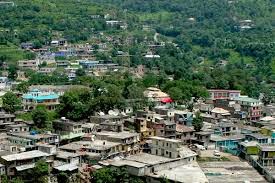
Short brief history of Poonch district of AJ&K, Pakistan

Poonch District is a district of Kashmir that is divided between India and Pakistan. The Pakistani part of Poonch district is part of its Azad Kashmir territory, whilst Indian Poonch is part of Jammu and Kashmir state. The capital of the Pakistan controlled side is Rawlakot, while the capital of the Indian side is Poonch.
Around 850CE, Poonch became a sovereign state ruled by Raja Nar, who was basically a horse trader. Its name also appears in Raja Tarangini, a chronicle of Kashmir written by Kalhan. It was called Prontsa then. According to Rajtrangani Raja Trilochan Pal of Poonch gave a tough fight to Mahmood Ghazanavi who invaded this area in 1020. Ghazanavi failed to enter Kashmir, as he could not capture the fort of Lohara (modern day Lor
In 1819 this area was captured by Maharaja Ranjit Singh and it remained under the occupation of Khalsa Darbar of Lahore till 1850.
In 1850, Raja Moti Singh who was son of Raja Dhayan Singh, the Prime Minister of Khalsa Darbar set up its separate principality known as Poonch state. Until 1935/36 Poonch remained a separate state, under the Khalsa Durbar. Then it was reduced to a Jagir by Maharaja Hari Singh of Jammu. The period from 1850 to 1947 is considered as the Golden era of the history of Poonch.At the time of partition, there were rumours that Muslims were being massacred in Jammu. It enraged the Poonchies and they intensified the struggle for independence from Jammu. A major part of the district went to Azad Kashmir. During the 1947-48 war between India and Pakistan, Poonch city was under attack of the rebel Poonchies, Pakistani tribals and Pakistan army for about one year. It was in the month of November 1948 that Poonch city was re-united with Indian-administered Kashmir.
an, in district Poonch).
 In 1596, Mughal King Jahangir made Siraj-Ud-Din ruler of Poonch. Siraj-Ud-Din and his descendant Raja Shahbaz Khan, Raja Abdul Razak, Raja Rustam Khan and Raja Khan Bahadur Khan ruled this area up to 1792.

Tuesday, 28 January 2014

Bagh district of AJ&K, Pakistan


Bagh district of AJ&K Pakistan

Short brief history of district Bagh, AJ&K (Pakistan)


          Bagh is one of the eight district of Azad Jammu and Kashmir, Pakistan. The district, which had been part of Poonch district, was created in 1988. The district is bounded by Muzaffarabad district to the north, Poonch district to the south, and Poonch district of the Indian-administered Jammu and Kashmir to the east; it is bounded by the Punjab, Rawalpindi district and Abbottabad district of Pakistan's Khyber Pakhtunkhawa province.
          The town Bagh in which is inDistrict Bagh was the 'launching pad' for the rebellion against the Mahraja of Jammu and Kashmir, Hari Singh in 1947 lead by a local youth Sardar Muhammad Abdul Qayyum Khan who is legend, veteran Kashmir politician who fought alone and single handedly
            District Bagh was created in 1988, when it was divided from Azad Jammu and Kashmir's Poonch district
          Bagh, like other areas of northwest South Asia, was hit by the2005 Kashmir Earthquake, in which a significant amount of damage occurred to the district.

Tuesday, 21 January 2014

Sakardu district of Gilgit-Baltistan, Pakistan

Sakardu district of Northern Area province of Pakistan
Short brief history of Sakardu district of Gilgit Baltistan (Pakistan)

Skardu District is part of Baltistan and currently constitutes one of the seven districts of the territory of 
Gilgit-Baltistan Pakistan.
In the 14th century the Buddhist population of Baltistan, Kargil and some villages of Ladakh converted into Muslim as a result of preaching of Syed Ali Hamdani (714-786 al hija) – a saint and Islamic scholar of Kobravi sufi order followed by preaching of Syed Muhammad Nurbakhsh (795-859 alhijra) a disciple of Khawaja Ishaq Khatlani himself the principal successor of Syed Ali Hamdani of same Kubravi Sufi Order. Thus a Muslim society developed first time in the Northern Areas of subcontinent
This Muslim society apart from Quran and Sunnah follows Al-Fiqatul Akhwat consisting of legal provisions (furu) and Usool Aitaqadia consisting of principles (Usool-e-Islam) written by Syed Mohammad Nurbakhsh. Therefore they are named Sufia Nurbakshia such as Shia Jafferia and Sunni Hanifia.
Nurbakhshis fundamentally like Ahle Sunnat & Ahle Shia believe in God, angels, holy books, Mohammed and last day judgment with oral declaration of Kalma-e- Shahadat and practically offering of five time prayers, fasting during Ramdan, Zakattul Mall (charity of wealth) and performance of Hajj, subject to availability of resources.
As interpreted by Arabic Dictionary Ul-Monjid in the Alfiqatul Ahwat a middle way between Shia and Sunni teachings is shown as a Shariat-e-Islmia. Mission of Syed Muhammad Nurbakhsh as proclaimed by both Shia and Shinn School of thoughts because of their teachings as introductory page Al-Fiqatul Ahwat has been to unify all different sects of Islam, by following Shria prevailing during abeying the lifetime of Mohammed.
Nurbakhshis are known as peaceful, tolerable and moderates, who not only equally respect other Muslim school of thoughts but also stress upon to behave human beings lovely – In the chapter relating to Mrar-bil- Maroof wa Nahi anil Munkar Alfiqatual Ahwat the aim of Islamic pravaling is defined to be obeying God's order and becoming kind to His creature.
In the Zikharatul Malook by quoting a Saying (HADITH) of Mohammed reported by Hazarat Imam Hussain the prime wisdom after accomplishment of religious duties is to love human beings and without regarding his being good or bed to do good deeds to every one.
Syed Ali Hamdani by quoting a Hadith of Mohammed says that those who are protectors of lives and properties of human being are Momin ( real believers) while Syed Mohammad Nurbakhsh says that a Momin ( believer) refrains himself from great sinful deeds ( Gona-e-Kabira) like Shireek, killing/ Murder, docorty theft forgery and cheatings etc.
Syed Ali Hamdani and Syed Muhammad Nurbakhsh are claimed by both Shia and Sunni probably because of their teachings stressing upon the Moadat-e- Ahlibeit and the need of following Sunnah of Mohammed apart fiqatual Ahwat permits different style of praying preachers agreeable to Shia and Sunni as optional.
Syed Ali Hamdani wrote about 170 books, pamphlets leaf lets handouts of which about 70 are traced in either published or unpublished shape. Similarly Syed Mohammad Nurbakhsh is an author of about one and half dozen books in Arabic or Persian.
In the Nurbakhshi Mosque called Khanqah adjacent to main praying halls small rooms are provided for the purpose solitary praying (Atikaf). These Khanqahs have been using as a central couching and preaching place by the Nurbakhshia.
It is said that followers of Nurabkhshis Maslak do exist in central Asia specially Tajkistan, Siangkang and Yarqand provinces of China, Turkey Kurdistan and Iran. But present day Nurbakhshis do not have any linkage with Nurabkhshis living in other parts of world out side sub-continent.

Sunday, 15 December 2013

Shikarpur District of Sindh province of Pakistan


District Shikarpur Sindh province of Pakistan

Short brief history of Shikarpur city of Sindh province of Pakistan

Shikarpur is the District of Sindh province of Pakistan. Shikarpur city was revived during the Kalhora rule. Shikarpur the seat of civilisation, culture, trade and commerce acquired political and economic importance because of its strategic location on the map of Sindh. In the early 17 th century this emerald city in the northern Sindh province of Pakistan.
        Dawood Potan built a mud fort around Shikarpur in the ancient days. It had seven gates Lakhi Dar, Hathi Dar, Khanpuri Dar, Karan Dar, Wagano Dar and Sevi Dar. It had a deep channel around there gates. As regards education, Shikarpuries were marching ahead even in 1930, according to one survey there  were about 70 graduates in the city of Shikarpur in 1930.
        District Shikarpur with an area of 2640 square KM. District Shikarpur was once famous for education and other civic amenities through out undivided India until the first half of the 20th century.

Copyright @ 2013 BEST. Designed by Templateism | Love for The Globe Press